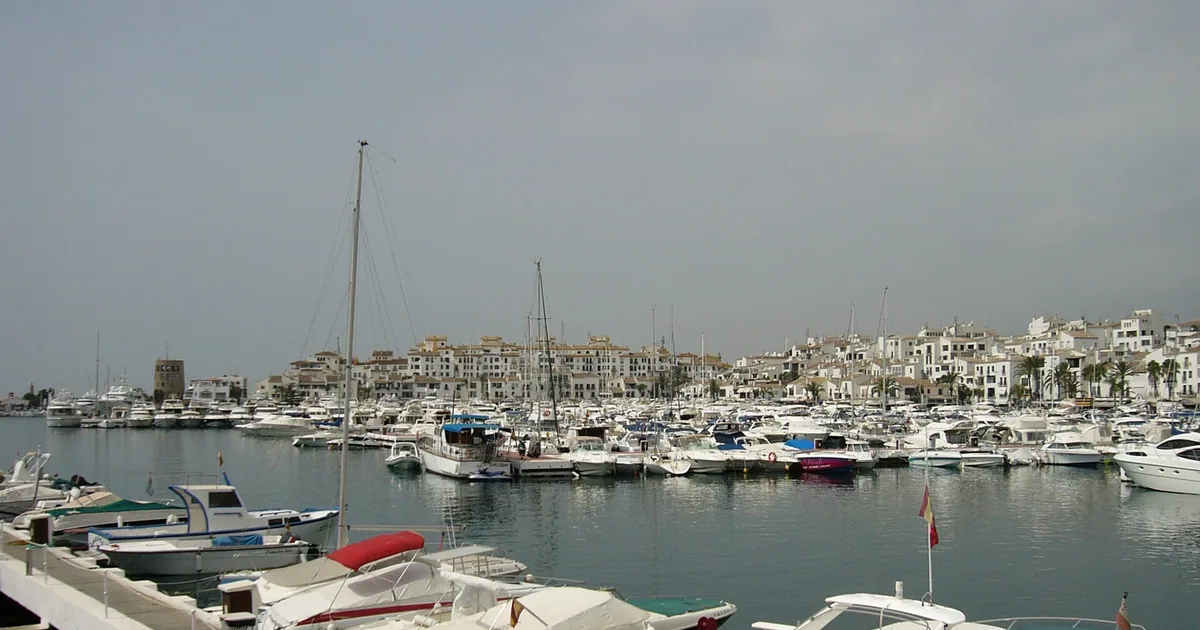
- Marbella is a town of 159,786 residents (INE, 2025); they eat behind the seafront, in the centre and in San Pedro de Alcántara.
- The menú del día is a weekday lunch: a first course, a second, dessert or coffee, bread and a drink at one price.
- Order like a local: a tapa at the bar, a media ración or ración to share at the table.
- Sidrería Usategui lists a chuletón at €53 a kilo; the Golden Mile grills charge €145–€160 for a one-kilo chop.
- In San Pedro, Bodeguita La Agüela (since 1994) and El Gamonal cook for families, not for passing trade.
Marbella is a working town of 159,786 people, according to the 2025 census, and most of them neither live nor eat on the Golden Mile. They have lunch near the markets, the offices and the schools, take the family to San Pedro de Alcántara at the weekend, and book a long table at a Basque tavern for the birthdays. As an agency booking Marbella escorts into restaurants every week, we notice that the evenings clients remember are often in these rooms, not the famous ones; for how a booking works, see our page on booking an escort in Marbella. Marbella's residents eat in San Pedro de Alcántara, in the streets behind the seafront and in a handful of taverns and casas de comidas, where a chuletón costs €53 a kilo instead of €155 and the weekday menú del día still sets the rhythm of lunch.
Where Do Marbella's Residents Actually Eat?
Away from the coast road. The neighbourhood restaurants sit around the Mercado Central and the Divina Pastora market in town, in the centre of San Pedro de Alcántara, and in residential pockets above the A-7. The test is simple: the room is busiest at 14:30 on a weekday and at 21:30 on a Friday.
A Town of 160,000 Behind the Seafront
According to INE's 2025 annual census, Marbella had 159,786 residents on 1 January 2025. Those people work, shop and eat in the town centre, in San Pedro and Nueva Andalucía, and their restaurants are priced for the twentieth visit, not the first. Marbella's tourist office counts more than 600 restaurants, and in our experience the ones still full on a wet Tuesday in February are the ones locals trust.
Start at a Market
Municipal markets are the local compass: the Mercado Central in the town centre, the Divina Pastora market about half a kilometre to the east, and San Pedro's Mercado Municipal. Stallholders, shoppers and delivery drivers need breakfast at nine and lunch at two, and the bars around each market serve them at prices meant for people who come back tomorrow. Go in the morning, when the fish and produce stalls are busiest, and ask a stallholder where they eat; it is the most reliable restaurant guide in Spain. For the coffee-and-tostada end of the day, our breakfast guide covers the routine.
How Does the Menú del Día Work?
It is a fixed-price weekday lunch: a first course and a second, each chosen from three or four options, then dessert or coffee, with bread and a drink included. It is written on a board or a printed sheet, served roughly from 13:30 to 16:00, and rarely offered at weekends or in the evening.
From Decree to Habit
The menú del día began as an order from the state. In August 1964 the Ministry of Information and Tourism obliged every restaurant to offer a daily set menu, with the price fixed by the restaurant's category; prices were freed during the transition to democracy, and the obligation itself was repealed in 2010 under the EU Services Directive, as the Spanish encyclopaedia entry records. It survived because it suits everyone: the kitchen cooks a few dishes in quantity, workers eat a proper lunch, and the bar fills between 14:00 and 15:30.
Ordering It Like a Local
Ask "¿Qué hay de menú?" and the waiter will recite or point to the board: primero (usually a soup, salad, legumes or rice), segundo (meat or fish), then postre o café. Bread and one drink, often wine, beer or water, are included; a second drink is not. Choose quickly, because the best primero runs out by 15:00. The menú is a weekday lunch, so a Saturday or a public holiday usually means the carta at full price. Prices on the board must include VAT, and the menus we quote below state it. Pay at the table, and leave the coins if you like; tipping is not expected.
Tapa, Media Ración or Ración: How Locals Order
A tapa is a small plate for one, eaten at the bar; a media ración is half a sharing plate; a ración is the full plate for the table. Locals mix them: two or three tapas standing up, then raciones to share sitting down. Ordering a ración each, as visitors often do, feeds a table twice over.
The Formats Compared
| Format | What arrives | Where you eat it | 2026 example |
|---|---|---|---|
| Tapa | A saucer-sized plate for one | Standing at the bar | Tortilla, ensaladilla or carne mechada at La Agüela |
| Media ración | Half a sharing plate | Bar or table, for two | La Agüela lists halves of its cheese, ham and prawn plates |
| Ración | A full plate for the table | Seated, for three or four | Eight homemade croquetas for €8 at Usategui |
| Menú del día | Two courses, dessert or coffee, bread, a drink | Seated, weekday lunch | Chalked on the board; ask before you sit |
| Set menu for groups | Shared starters, a main each, wine and coffee | Seated, booked ahead | €44, €54 or €64 a head, wine included, at Usategui |
Bar or Table?
The bar is quicker, cheaper and more sociable, and it is where you learn what the kitchen does well: watch what arrives for the regulars and point. The table is for raciones, wine by the bottle and a proper lunch. In busy places the prices can differ between the two, and a terrace may cost more again; the menu or the board will say so. For the old-town bar crawl, which is its own art, our tapas guide covers the timing and the etiquette, and this guide stays with the sit-down end of local eating.
San Pedro de Alcántara: Where Marbella's Families Eat
San Pedro, ten minutes west of Puerto Banús, is part of Marbella but feels like a separate Andalusian town. Bodeguita La Agüela on Calle Lagasca has poured wine and served tapas since 1994, and El Gamonal cooks grilled meat and fish for families from Thursday to Sunday, with first communions in spring.
Bodeguita La Agüela, Calle Lagasca 24
La Agüela opened as a bodega in 1994 in a building that had been a guesthouse, a pensión and a casa de comidas run by the Romero family. The lists are a local's shopping list: Manchego, serrano and acorn-fed chorizo, carne mechada, morcilla, tortilla and ensaladilla as tapas; codillo, ox cheek, Iberian secreto, flamenquines, callos and cocido among the specials. Its winter hours run Monday to Saturday 12:00 to 15:30 and 20:00 to 23:00, and Sunday 12:00 to 15:30. It takes cards and WhatsApp bookings, and its website gives as much space to cycling, motorbikes and football as to food.
El Gamonal and the Family Celebration
El Gamonal, on Avenida Lorenzo Morito Romero, is the kind of restaurant Spanish families book for a christening, a first communion or a Sunday with grandparents: traditional Spanish cooking, meat from the grill, fish from the parrilla and salt-baked sea bass, with a separate events side for weddings. It opens Thursday to Sunday, 13:00 to 16:00 and 19:30 to 23:30, and closes Monday to Wednesday, which tells you who its customers are. Communion and christening parties mean long family tables on spring weekends. For the rest of the town, our San Pedro guide covers the boulevard and the beach.
A Basque Cider House Above the Motorway
Sidrería Usategui, in the El Palomar building up by the A-7, is a Basque cider house with room for large groups. Its online menu lists a chuletón at €53 a kilo, fish of the day at €43 a kilo and group menus from €44 a head with wine and cider included.
What It Serves and What It Costs
The menu is northern Spain transplanted: Cantabrian anchovies, spider-crab pudding, txistorra, morcilla from Burgos, piquillo peppers stuffed with oxtail, hake in green sauce, cod kokotxas, and the chuletón, cured beef from older cattle, served with lettuce and onion salad. Croquetas are €8 for eight; Iberian secreto €16; the house Rioja €19.50 a bottle. Compare the beef: our steakhouse guide found one-kilo chops at €145 to €160 on the Golden Mile in 2026. Different rooms, different cattle, but the gap explains why residents drive up the hill.
Finding It, and When It Opens
Usategui sits in the El Palomar building, and its own directions start from the bus station: cross the motorway by the Calle Chaparral bridge, turn right along El Almendro and cross back over on Calle del Algarrobo. In its winter timetable it opens for lunch every day from 13:30 to 16:00 and for dinner only on Friday and Saturday, 20:30 to 23:30. The three group menus (Artxanda €44, Urkiola €54, Amboto €64) include water, beer, cider, a Rioja or Ribera, dessert and coffee, and the house says it has room for large groups. Book all the same.
The Casa de Comidas, Old and New
A casa de comidas is the traditional Spanish eating house: daily stews, a short list, family tables and fair prices. La Agüela's building was once one. In the old town, Enea, opened in June 2025 by the team behind the starred BACK, revives the format with a tavern for medias and raciones downstairs and a terrace upstairs.
Enea on Calle San Lázaro
Chef David Olivas and sommelier Fabián Villar, whose BACK holds a Michelin star, spent two years looking for the right building before opening Enea in June 2025 on Calle San Lázaro. The bodega downstairs is for sharing medias and raciones over a drink; the terrace upstairs serves Andalusian-based dishes at the table. The kitchen describes its cooking as cured meats, stews, aliños and recipes of always, in a current format made for sharing. It is more polished than a neighbourhood casa de comidas, so book ahead, but it shows what the old format was for.
What Eating Out Costs Now
Prices have moved. INE's consumer price index shows restaurant and hotel prices in Andalusia up 4.3% in the twelve months to December 2025, and 4.6% across Spain, according to its regional series. The neighbourhood places absorb it better because they buy for volume and cook what is in season. The practical gap remains large: a shared ración of croquetas, a secreto and a bottle of house Rioja at Usategui comes to €43.50 for two before dessert, less than the €52 steak tartare alone at the Marbella Club's grill.
Eating Like a Local With a Companion
A neighbourhood dinner is one of the most relaxed bookings we arrange: no dress code, no doorman and a room that is busy without being a scene. Book a dinner date, a minimum of three hours and so from €900, or an hourly outcall (€300 in central Marbella), and tell us the restaurant.
A Spanish Speaker at the Table
Local menus are in Spanish first, and the best dishes are often only on the board. Linda, the Spanish companion on our books, will read the board aloud and ask what the kitchen recommends; her profile shows when she is free. For San Pedro, our San Pedro escorts page covers bookings in the town, including a Thursday dinner at El Gamonal. A dinner-date booking is the usual format; a dinner date can be changed or cancelled free until 24 hours before.
Timing and Paying
Book the table for 21:00 or 21:30, which is when these rooms fill with families, and expect to stay two hours. Our price is the same on a Friday or Saturday as on a weekday. You pay her directly before the booking starts, by cash, bank transfer (to her or to the agency) or crypto; a booking made in advance carries a 25% deposit by transfer or crypto, with the balance paid to her at the start, and a same-day booking needs none. The restaurant bill, at these prices, is the small part of the evening.
Frequently Asked Questions
What is the menú del día in Spain?
A fixed-price weekday lunch: a first course and a second chosen from a short list, then dessert or coffee, with bread and a drink included. It was made compulsory by a 1964 decree and the obligation was repealed in 2010, but most neighbourhood restaurants still serve one from Monday to Friday.
Where do locals eat in Marbella?
Around the Mercado Central and the Divina Pastora market in town, in the centre of San Pedro de Alcántara, and in taverns such as Sidrería Usategui above the A-7. The tell is a room full at 14:30 on a weekday and 21:30 on a Friday, mostly with Spanish-speaking families.
Is San Pedro de Alcántara worth a visit for dinner?
Yes, if you want a local evening. San Pedro is part of Marbella, about ten minutes west of Puerto Banús, with its own centre. Bodeguita La Agüela on Calle Lagasca has served tapas since 1994, and El Gamonal cooks grilled meat and fish from Thursday to Sunday.
Do I need to speak Spanish in a local restaurant?
It helps, because menus and boards are in Spanish first and the daily dishes are often recited. Learn primero, segundo, postre, media ración and la cuenta, point at what regulars are eating, and ask what the kitchen recommends. Most waiters will meet you halfway.
Planning a Local Night Out?
Tell us the restaurant, the table time and whether you would like a companion who speaks Spanish. We confirm who is free, give you the price and suggest where to meet so you arrive together.
Book on WhatsApp