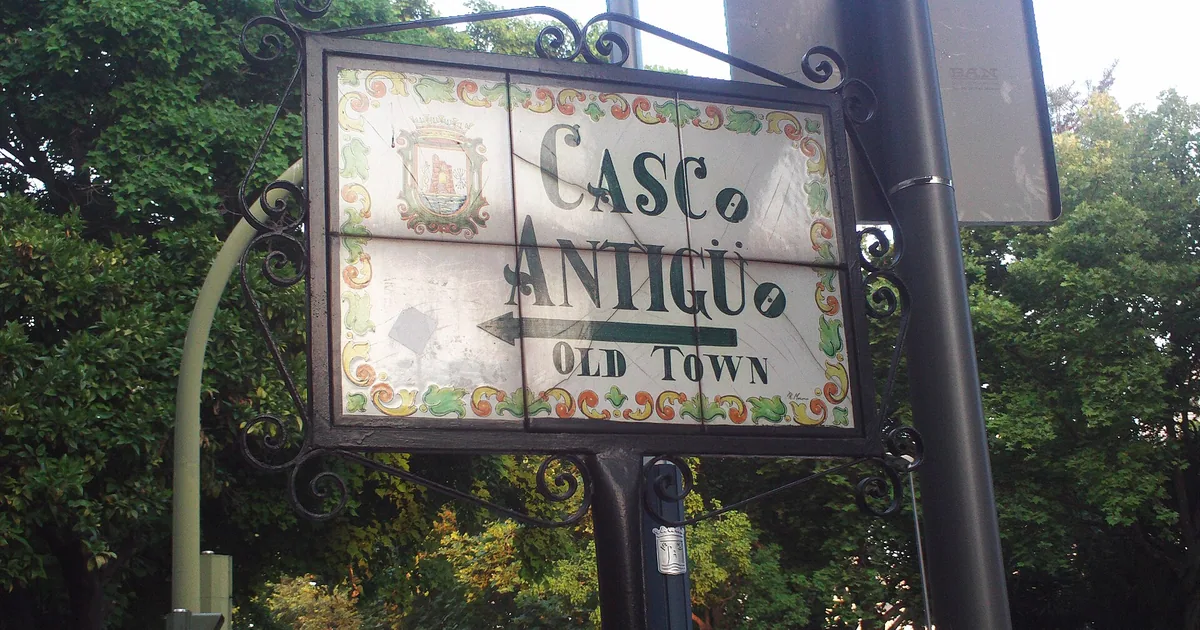
- The loop is 1.8 km, about 25 minutes of walking, from the Dalí bronzes on the Avenida del Mar to the Ermita del Santo Cristo
- Start half an hour before sunset: 21:43 at midsummer, 21:12 in mid-August, 20:00 in early October, 18:07 in mid-December
- The Plaza de los Naranjos was opened after 11 June 1485; its town hall was finished in 1572 and its orange trees planted in 1941
- Two kitchens on or just off the route are in the 2026 Michelin Guide: Casa Eladio by the castle wall and Candeal on Plaza Blas Infante
- Booked as a dinner date, the evening with a companion runs three hours or more, from €900
The old town is the one part of Marbella that is better at ten at night than at noon. The stone has cooled, the coaches have gone, and the 1779 sundial on the town hall is in shadow while the terraces under the orange trees fill. A night walk through Marbella's Casco Antiguo covers about 1.8 km and 25 minutes of actual walking, from the Avenida del Mar to the Ermita del Santo Cristo; start half an hour before sunset and, with a drink, dinner and a nightcap, it fills three to four hours.
It is the route the concierge team at our escort agency in Marbella sends with a dinner-date booking: ten stops, the history worth pausing for and where to sit. If you have not booked with us before, read how booking a Marbella escort works first.
The Route at a Glance: Ten Stops in 1.8 km
The loop starts at the Dalí bronzes on the Avenida del Mar, crosses the Alameda to the Plaza de los Naranjos, runs east past the church and the castle walls to Plaza Altamirano, then doubles back across the square and climbs Calle Ancha to the Ermita del Santo Cristo. Measured on OpenStreetMap, it is 1.8 km.
The Ten Stops, Timed
Distances follow OpenStreetMap's footpaths, at an easy pace on cobbles.
| Stop | What to look at | From the previous stop | Where to sit |
|---|---|---|---|
| 1. Avenida del Mar | Dalí bronzes | Start, at the seafront | Benches along the avenue |
| 2. Parque de la Alameda | 18th-century park, original fountain | 315 m, 4 min | Benches by the fountain |
| 3. Plaza de los Naranjos | Town hall (1572), Ermita de Santiago | 240 m, 3 min | A terrace, for one drink |
| 4. Plaza de la Iglesia | Encarnación church, the castle's Torre Blanca | 160 m, 2 min | Stand and look |
| 5. Calle Carmen and Calle Trinidad | Castle walls, Torre del Reloj | 70 m, 1 min | Keep walking |
| 6. Hospital Bazán | 16th-century hospital, now the print museum | 45 m, 1 min | View from the street |
| 7. Plaza Altamirano | Lamppost, view of the church tower | 105 m, 2 min | A bar, for a plate and a glass |
| 8. The Hospitalillo | Hospital Real de la Misericordia | 130 m, 2 min | Head back to the square |
| 9. Plaza del Puente de Ronda | Site of the old Ronda gate | 430 m, 6 min | Dinner on Calle Virgen de los Dolores |
| 10. Plaza del Santo Cristo | 16th-century hermitage | 280 m, 4 min | The tablao on the square, or a taxi |
Start Half an Hour Before Sunset
By sunrise-sunset.org's figures for the town, the sun sets at 21:43 on 21 June, 21:12 in mid-August, 20:29 in mid-September and 20:00 in early October; after the clocks go back on 25 October, it is dark by 18:07 in December. Leaving thirty minutes before sunset puts you on the main square at dusk and at dinner around 21:30 in summer. The route climbs about 30 metres, from 8 m at the seafront to 39 m at the Santo Cristo on EU-DEM elevation data, more than half of it before the Plaza de los Naranjos. For evenings elsewhere, see our guide to Marbella at night.
Avenida del Mar and the Alameda: Where to Start
Meet on the Avenida del Mar, the pedestrian avenue from the seafront to the Alameda park, which holds a permanent display of Salvador Dalí bronzes. A taxi can set you down on the Avenida de Ramón y Cajal, the main road along the Alameda's north side, four minutes' walk from the sea end.
The Dalí Bronzes
The avenue was once part of the Alameda. A car park was dug beneath it from the 1980s, and in the 1990s it took its present form, with Dalí's bronzes along its centre, according to the council's heritage pages. Walk it from the sea end, above the beach our Playa de la Venus guide covers by day. It is the widest open space in the centre, which is why we use it when a client and a companion arrive from different directions.
The Alameda, an 18th-Century Park
The council dates the Alameda to the eighteenth century, when it covered 20,000 square metres, a fifth of the town's built-up area. The original plan had a central walk, six round clearings with built-in benches and a fountain, and the fountain survives. Look up at the ficus trees, including a fiddle-leaf fig the council singles out, and at the building on the west side, put up in the 1930s for the Sociedad Recreativa Casino, the town's social club. When we name a meeting point in town, it is this fountain: central and impossible to mistake.
Plaza de los Naranjos: The Square Cut Through the Medina
After Ferdinand took Marbella on 11 June 1485, the heart of the Moorish medina was demolished to open a main square and a new street, Calle Nueva, down to the sea gate. That square is the Plaza de los Naranjos, and its three oldest buildings tell the story.
Three Buildings on the Square
On the north side, the town hall was finished in 1572 under the corregidor Juan Osorio; its wrought-iron balcony is dated 1632 and the east wing with the sundial 1779, according to the council. The Casa del Corregidor at number 6 mixes a Gothic pointed arch, Mudéjar plant motifs and a Renaissance stone doorway: the sixteenth-century home of the Crown's representative. The Ermita de Santiago, a single nave of 8 by 16 metres, was a mosque consecrated after the conquest and made the town's parish in 1505; the council calls it Marbella's oldest church.
One Drink, Then Move On
The square has been the Plaza Mayor, the Plaza de la Constitución, the Plaza de la República and the Plaza del General Franco, among other names; the orange trees that named it were planted in 1941, replacing palms that had themselves replaced horse chestnuts. Its terraces are where every visitor sits, so treat them as the first drink rather than dinner: twenty minutes, a vermouth or a glass of Málaga white, and you watch the square fill while the table you booked elsewhere waits.
The Encarnación Church and the Castle Walls
Two minutes east, the Plaza de la Iglesia holds the Iglesia de la Encarnación, probably built over the main mosque, and a corner of the tenth-century Moorish castle. From there Calle Carmen and Calle Trinidad follow the walls: the best-preserved and quietest stretch of the walk.
The Church of the Encarnación
Look up first: a plaque on the side facing the square dates the bell tower to 1618 and to the bishop Luis Fernández de Córdoba. The main door, the Puerta del Sol, is carved in ochre stone in the Rococo style of the second half of the eighteenth century. Inside is the Sol Mayor organ of 1975, which the council calls the most important built in Spain in the last century; our arts festivals guide lists its concerts. Where the square meets Calle Carmen stands the Torre Blanca, one of the castle's towers.
Following the Castle Walls
The council dates the castle to the tenth century and its walls to the eleventh and twelfth, when they carried ten, possibly eleven, towers. Its castle page traces the outline along eight streets: Solano, Portada, Arte, Salinas, Trinidad, Carmen, Ortiz del Molinillo and Virgen de los Dolores. Roman capitals are built into one tower, the Torre del Reloj stands on Calle Carmen and the keep, the Torre del Homenaje, is halfway along Calle Portada. People live against these walls, so this is the stretch to walk quietly after eleven.
Hospital Bazán, Plaza Altamirano and the Hospitalillo
A few steps along the walls, the old Hospital Bazán houses the Museo del Grabado Español Contemporáneo, and Plaza Altamirano opens just below it. The loop then passes the Hospitalillo, founded by the Catholic Monarchs, before heading back to the main square: five minutes linking three of the quarter's best corners.
Two Old Hospitals
Alonso de Bazán, warden of the fortress, ordered in his will of 1570 that his houses become a hospital, and it served the sick for nearly three centuries. Restoration began in 1989; from the street, look at the Mudéjar tower on its south-west corner, with its three stone arches. Round the corner, the Hospital Real de la Misericordia, founded by the Catholic Monarchs to treat travellers from outside the town, is now the Hospitalillo cultural centre on the Plaza Practicante Manuel Cantos; its chapel keeps a wooden Mudéjar ceiling.
Plaza Altamirano
The council calls it one of the loveliest corners of the old town: a cobbled square around a single central lamppost, with the Encarnación's tower framed at the end of Calle Apartada. Calle Mendoza runs from it to the Plaza del Puente de Málaga, the site of one of the walled town's three gates; the others were the sea gate and the Ronda gate, which you reach later. The bars here are where to stop for a plate and a glass, and our old town tapas guide takes them bar by bar.
Calle Ancha and the Santo Cristo: The Quiet End
Back across the square, Calle Virgen de los Dolores follows the castle's west side to the Plaza del Puente de Ronda, the old gate to the north. From there Calle Ancha climbs gently for 280 metres through the Barrio Alto to the Plaza del Santo Cristo, where the walk ends beside a sixteenth-century hermitage.
Calle Ancha's Mansions
In the sixteenth century the town grew north beyond its walls, towards the hermitage and a Franciscan convent, and the new quarter became the Barrio Alto. Calle Ancha was one of its grand nineteenth-century streets, the road to the farmsteads and the sugar and olive mills to the north. Its houses carry coats of arms, deep balconies and Andalusian Baroque detail; the finest is the Casa Correa at number 18, on the corner of the Plaza del Santo Cristo, dated by its heraldry to 1763. The street rises about nine metres from the Puente de Ronda, enough to feel in heels.
The Santo Cristo and the Way Back
The hermitage was built in the second half of the sixteenth century as part of the Franciscan convent: look for the carved stone doorway and the octagonal camarín behind the altar, roofed in glazed tiles. The Tablao Flamenco Marbella runs its shows at number 4 on the same square, and our flamenco guide covers how to book it. Otherwise it is 570 metres and eight minutes downhill to the Alameda and a taxi; our guide to getting around without a car has the night fares.
Where Should You Eat on the Walk?
Book the table for the middle of the walk, not the end. Two kitchens on or just off the route are in the 2026 Michelin Guide: Casa Eladio on Calle Virgen de los Dolores, against the castle wall, and Candeal on Plaza Blas Infante, two minutes east of Plaza Altamirano. In summer, book ahead.
Casa Eladio, Against the Castle Wall
A long-running family restaurant, now cooked by its third generation and listed in the Michelin Guide at its second price band. The cooking is updated traditional food, built around fish and seafood with acorn-fed Iberian pork, à la carte or as one of two tasting menus, Esencia and Camino del Sur. Michelin lists it as open from 18:00 to 23:00 and closed on Thursdays, with tables outside. It sits on the street between the main square and the Puente de Ronda, so book 21:30, walk the first half of the route beforehand and Calle Ancha afterwards.
Candeal, for a Longer Table
Candeal, on Plaza Blas Infante just east of Plaza Altamirano, is the more ambitious booking. Chef Pablo Rebollo, from Valladolid, cooks creative Mediterranean food with Castilian roots, fermentation and game, and bakes his bread every day from organic flour milled in Coín, inland from Marbella. Michelin puts it in its third price band, with an à la carte and tasting menus of ten and fifteen dishes. Fifteen dishes is an evening in itself, so on that night walk the whole loop first and book the table for 21:00.
An Old Town Evening With a Marbella Escort
We book it as a dinner date: three hours at least, from €900, covering the walk, a table on the route and a drink afterwards. Send us the restaurant and the time, and we brief the companion on the route, the dress and the meeting point, usually the Alameda fountain or your hotel.
How We Set the Evening Up
The old town suits a dinner-date booking better than anywhere on the coast because the evening already has a shape: a meeting point, ten stops and a table halfway. Tell us when you want to start, where you are eating and whether she meets you at the hotel or the fountain. Flat shoes are part of the brief; the cobbles punish heels. If you would like someone who can chat with the waiter and read the plaques aloud, ask for a Spanish speaker such as Linda, or browse our Spanish companions.
Rates, Payment and Changing Plans
A dinner date runs three hours at least, from €900, at the same price at weekends and in July and August; for the walk and a drink only, an outcall in central Marbella is €300 an hour. You pay her directly before the booking starts, in cash, by transfer or in crypto; a booking made in advance takes a 25 per cent deposit by transfer or crypto, to her or to us, with the balance paid to her at the start. A dinner date can be changed or cancelled free until 24 hours before; our cancellation guide lists every window. If dinner becomes a long night, extra time is €300 an hour, or an overnight is €3,000 to €4,000 depending on the companion and the length, as our hourly versus overnight comparison sets out; our Marbella companions page shows who is free.
Frequently Asked Questions
How long does it take to walk around Marbella old town at night?
Our loop from the Avenida del Mar to the Ermita del Santo Cristo is 1.8 km, about 25 minutes of walking at an easy pace. With a drink on the Plaza de los Naranjos, a stop at the castle walls and dinner on the route, plan on three to four hours from start to finish.
What time should you start an evening walk in Marbella old town?
Half an hour before sunset. In Marbella the sun sets at about 21:43 at midsummer, 21:12 in mid-August, 20:29 in mid-September and 18:07 in mid-December, by sunrise-sunset.org's figures. Starting then puts the main square at dusk and dinner at the hour Spanish restaurants fill.
When was the Plaza de los Naranjos built?
It was opened after Ferdinand took the town on 11 June 1485, when the centre of the Moorish medina was demolished to make a main square. The town hall on its north side was finished in 1572, and the orange trees that gave the square its present name were planted in 1941.
Where can you see the old castle walls in Marbella?
Along Calle Carmen and Calle Trinidad, two minutes east of the Plaza de los Naranjos. The castle dates from the tenth century and its walls from the eleventh and twelfth; their outline follows eight streets, from Solano and Portada to Virgen de los Dolores, and the Torre Blanca stands beside the Plaza de la Iglesia.
Planning an Evening in the Old Town?
Send us your date, the start time and where you are eating. We will suggest a companion who enjoys a walking evening, brief her on the route and confirm the price and her taxi for the dinner date.
Book on WhatsApp