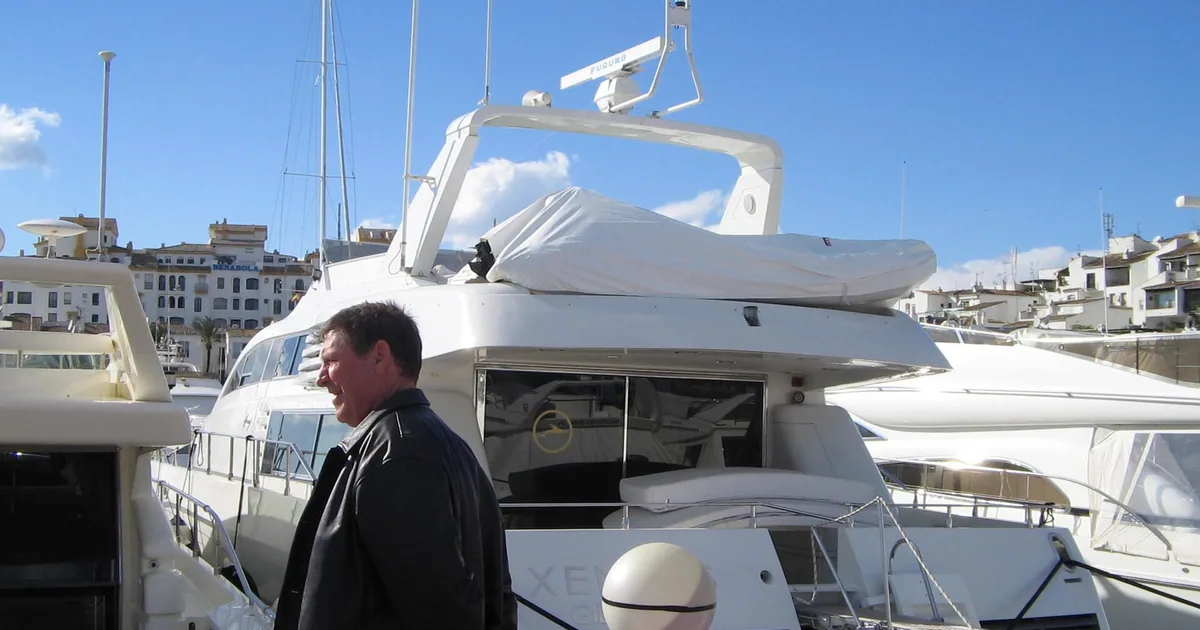
- Agree the plan with the skipper the day before: one close anchorage for the day's wind, lunch at two, back by six
- The Comité Champagne advises serving at 8–10°C, chilled 20–30 minutes in a bucket of ice and water; on deck, keep the rest in a cool box
- Fire, fireworks and barbecues on deck are banned in Puerto Banús, so plan a cold menu of jamón, cheese, cured fish, salads and fruit
- The Golden Mile is about 1.8 nautical miles from Banús and Guadalmina 2.5; staying close means more swimming and less fuel
- Her time is €300 an hour, with the boat and food paid separately; changes are free until 72 hours before
The boat is booked; the day itself is still a blank. This is the part clients of our agency most often leave to chance, and it decides whether a yacht day is remembered for the swim and the long lunch or for warm champagne and a rolling deck. Costs and the usual routes are in our private yacht charter guide, and the contract in our charter booking guide. This page plans the hours on board: what to buy, how to keep it cold, where to anchor, when to eat and what to play. Agree one close anchorage with the skipper for the day's wind, provision a cold menu, keep the champagne at 8–10°C in ice and water, eat at two in the shade and be back on the berth by six.
What Makes a Champagne Day on a Yacht Work?
A plan agreed with the skipper before you board: one anchorage chosen for the day's wind, a cold menu that survives the heat, champagne kept between 8 and 10°C, shade at lunch and a fixed time back. The boat itself matters less than those five decisions.
The Day, Hour by Hour
This is the shape we suggest for a summer day out of Puerto Banús; a half day simply drops the afternoon. Solar noon in Marbella falls at about 14:20 between June and August, because Spain's summer clocks run more than two hours ahead of solar time here, so the hardest light comes after lunch, not before.
| Time | Where | What should be ready |
|---|---|---|
| 10:30 | Pontoon, Puerto Banús | Provisions loaded, passenger list sent the day before |
| 11:00 | Out of the port at 3 knots | First bottles into ice and water |
| 11:30 | Anchored off the Golden Mile or Guadalmina | First glass at 8–10°C, first swim |
| 14:00 | At anchor, under the bimini | Cold lunch out of the cool box |
| 14:20 | Solar noon, hardest sun | Shade, water, a second swim later |
| 17:30 | Anchor up | Rubbish bagged, glasses rinsed, music down |
| 18:00 | Back on the berth | Car or taxi waiting, dinner booked for nine |
Brief the Skipper the Day Before
Send the number aboard, the boarding and return times, the anchorage you would like and when you want lunch. Ask four things back: is there a fridge or only cool boxes, is there an ice maker, how much of the deck is shaded, and is there a speaker. The skipper chooses the final anchorage for safety, which Spanish law leaves to him, but a skipper who knows your plan will find you a bay that fits it.
Provisioning in Puerto Banús: Shops, Concierge and Corkage
Three routes: buy it yourself, have the marina's concierge arrange it, or take the operator's catering. Marbella's tourist office lists a Club del Gourmet inside El Corte Inglés on Calle Ramón Areces, a short drive from the quay. If the operator caters, ask whether your own champagne carries a corkage charge.
Buying It Yourself
Shop the afternoon before, not the morning of the charter: bottles bought warm need hours in a fridge, and a morning shop eats into the boarding time. A 75cl bottle pours six 125ml glasses, so two bottles per couple is a generous full day. Buy more water than champagne by volume, two or three bags of ice per cool box, bin bags and a roll of kitchen paper. Pack cheese, jamón and fruit in sealed boxes; wet ice and paper wrapping do not mix.
Concierge, Catering and Corkage
Puerto Banús's 2026 arrival notes list provisioning among the concierge's services, and its welcome guide describes catering on board, staff included. Operators also cater, usually per head. The question to settle in writing is corkage: some operators welcome your own bottles, others that cater charge to open them. Put the answer, and the drinks you are bringing, into the confirmation alongside the fuel clause. On a larger yacht with a proper galley, a chef aboard works much as one does in a villa, which our private chef post covers.
How Do You Keep Champagne Cold on an Open Deck?
The Comité Champagne advises serving at about 8–10°C and chilling a bottle in an ice bucket half filled with water and ice for 20 to 30 minutes. On a July deck that means two stages: a cool box of ice for storage, and a bucket of ice and water, in the shade, for the bottle in use.
Ice, Water and Shade
The Comité Champagne's own method is the one that works at sea: ice with water, not ice alone, because water touches the whole bottle. Keep the bucket under the bimini, never on the sunpad, and take one bottle at a time from the cool box. Arrive with every bottle already cold from the fridge; the bucket keeps it at temperature, it does not rescue a warm one. Refill the ice at lunch.
Glasses and Opening at Sea
The Comité recommends a tall, tulip-shaped glass. On a boat, buy the shape in unbreakable acrylic: broken glass on a deck where everyone walks barefoot ends the swimming for the day. To open, take off the cage, keep a firm hold on the cork and turn the bottle, not the cork, pointing it away from guests and from the boat anchored next to you. A sparkling-wine stopper keeps a half-finished bottle lively until the afternoon.
A Menu That Survives Five Hours in the Heat
Cold, simple and eaten with fingers or a fork: jamón, cheese, cured or marinated fish, salads dressed at the last minute, fruit. Fire, fireworks and barbecues on deck are banned inside Puerto Banús, and many day boats have no real galley, so plan nothing that needs cooking. Eat at two, in the shade.
What Travels Well
Jamón ibérico and Manchego, sliced and boxed; marinated anchovies and smoked fish on ice; a salad of tomato and burrata dressed only when served; gazpacho in a chilled bottle, poured into cups; watermelon, cherries and peaches. Avoid anything with mayonnaise that has to sit for hours, and anything that needs a knife and a steady table. Keep the lunch cool box separate from the drinks one, so it is opened once, at two, rather than every ten minutes.
The Port Rules That Shape the Day
The marina's rules for berth users are short and specific. No fire, fireworks or barbecues on deck in the port. No swimming or fishing inside it. Alcohol aboard private boats and in licensed premises, not on the quays. Organic rubbish is collected from the pontoons between 05:00 and 07:00 only; outside those hours the marina collects on request for €120 plus tax, so take yours ashore. Every boat must also request entry and departure from the port on VHF channel 9, so expect the skipper to be on the radio at the harbour mouth.
Choosing the Anchorage
Choose for the wind and the shade, not the postcard. Close options from Puerto Banús are off the Golden Mile, about 1.8 nautical miles east, or off Guadalmina, 2.5 miles west; the Artola dunes are about 9 miles. Boats stay outside the buoyed bathing zone, or 200 metres from beaches that have no buoys.
Wind, Swell and Where the Shade Falls
An anchored boat swings to face the wind, so the wind decides where the cockpit points and where the shade lands at two o'clock. In an easterly Levante the skipper will look for water sheltered from the east; in a westerly, the opposite. A swell can arrive hours after the wind that made it, and a monohull rolls in it; if anyone aboard is susceptible, our catamaran comparison explains why the second hull matters at anchor.
Close or Far
A bay twenty minutes away gives you four hours in the water and burns little fuel; the run to Artola gives you dunes and emptier water but costs time each way. The sea off Marbella is around 20.9°C in June, peaks near 23.4°C in August and holds about 21.8°C in September, so late summer is the long-swim season. The dunes themselves, and what is protected there, are covered in our Artola dunes guide.
Music, Noise and the Boat Anchored Next to You
Bring a playlist and check the speaker; Marbella JetSki's charter boats, for one, have Bluetooth sound systems. Keep the volume for your own deck: sound carries over flat water, and the boat 50 metres away chose the bay for quiet. In the port, the marina's rules forbid behaviour that disturbs other users.
The Playlist and the Speaker
Download the playlist before you leave; mobile data at anchor is fine near the shore but it is one less thing to fail. Something unhurried for the run out, more energy after lunch, and quiet for the return. Turn it off while the crew anchor and while they come alongside, when they need to hear each other, and keep the speaker in the shade with the champagne: phones and speakers overheat on a white deck in July.
Courtesy at Anchor
Give the boats already in the bay room to swing on their anchors; dropping yours too close is the quickest way to make enemies at sea. A party day is fine in a busy bay off the Golden Mile in August; it is less welcome in a quiet one off Guadalmina on a Tuesday in June. Coming back into Puerto Banús, speed is limited to 3 knots in the channel and the basin, music goes down and everyone sits while the crew work.
Booking a Companion for the Day
Tell us the boat, the pontoon, the boarding and return times and the plan, and we suggest companions who enjoy a long day of sun and swimming. Her time is €300 an hour, so a seven-and-a-half-hour day is €2,250; the boat and food are paid separately. Changes are free until 72 hours before, and a boat cancelled by the skipper is never charged.
What She Brings and What You Provide
She brings swimwear, a cover-up, sun cream and a change for dinner; you provide shade, water and a place to change, which a catamaran's cabins make easy. Our yacht companions are grouped separately because a deck at 14:20 in August is a different request from a dinner table. Her passport details go to the operator with everyone else's. To see who is free on your date, start with our Marbella escort bookings page, or our Puerto Banús escorts page if you are staying in the port.
After the Boat
Back at six, a shower and an hour's rest, then dinner on the quay at nine; our seafood guide covers the tables. A day plus dinner is a long booking, and extra time is €300 an hour, paid to her on the spot, in cash or by transfer. A yacht day booked in advance takes a 25 per cent deposit by transfer or crypto, to her or to us, and you pay her the balance at the start. Cancellation windows for every booking type are in our cancellation guide.
Frequently Asked Questions
What temperature should champagne be on a boat?
The Comité Champagne advises about 8 to 10°C. On deck, store bottles in a cool box of ice and chill the one in use in a bucket half filled with ice and water for 20 to 30 minutes, kept in the shade. Board with every bottle already cold from the fridge.
Can we have a barbecue on the yacht in Puerto Banús?
No. The port's rules ban fire, fireworks and barbecues on deck anywhere inside Puerto Banús, and many day-charter boats have no real galley. The practical menu is cold: jamón, cheese, marinated fish, salads dressed at the last minute and fruit, eaten at anchor in the shade around two o'clock.
Where should we anchor for a day out of Puerto Banús?
Close is usually better. The Golden Mile is about 1.8 nautical miles away and Guadalmina about 2.5, which leaves more time to swim than the 9-mile run to the Artola dunes. Stay outside the buoyed bathing zone, or 200 metres from beaches without buoys, and let the skipper choose for the wind.
Can we bring our own champagne on a charter?
Usually, but ask first. Some operators welcome your own bottles; others that cater may charge corkage on wine you bring. Put the answer in the written confirmation, and bring tulip-shaped glasses in unbreakable acrylic: broken glass on a barefoot deck ends the swimming for the day.
How much is a companion for a yacht day?
Her time is €300 an hour as standard, so a four-hour half day is €1,200 and an eight-hour full day €2,400, with the boat and the food paid separately. Changes are free until 72 hours before a yacht day, a boat cancelled by the skipper is never charged, and we send her passport details straight to the operator for the passenger list.
Planning the Day on Board?
Send us the boat, the pontoon, the boarding and return times and the plan for lunch. We confirm a companion who enjoys a day of sun and swimming, the price for the hours you want, and pass her details to the operator for the passenger list.
Book on WhatsApp