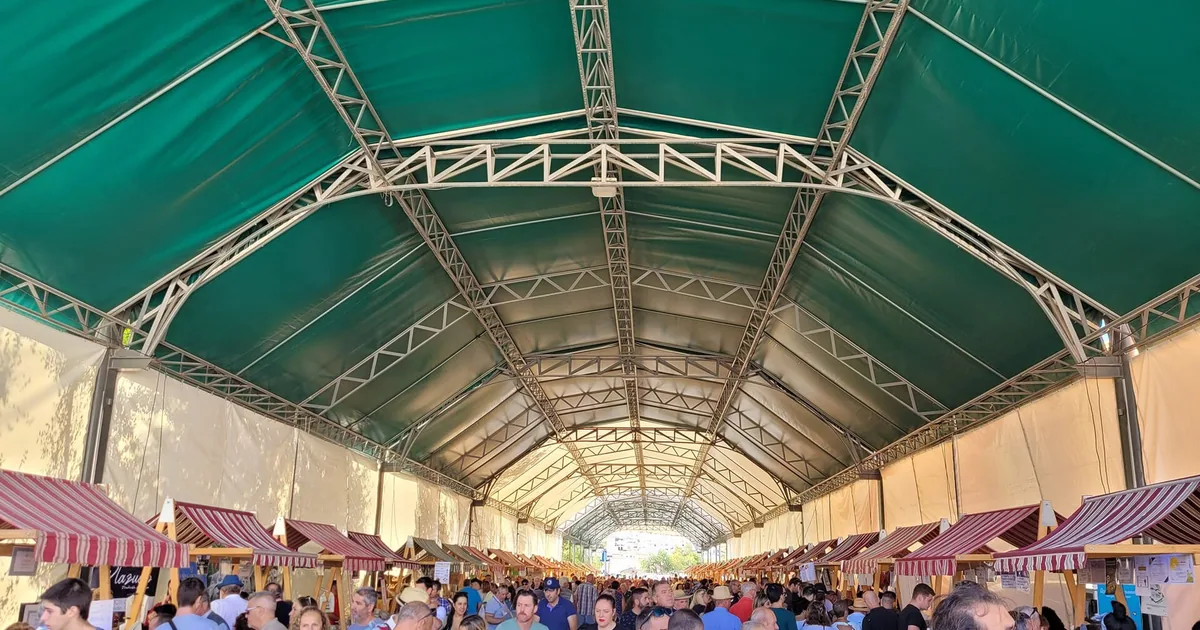
- The feria runs Monday to Sunday in the week of 11 June: 8 to 14 June in 2026, and on that pattern 7 to 13 June in 2027
- By day it fills the Paseo de la Alameda and Avenida del Mar with 21 bars; by night a fairground near La Cañada ran rides until 3am in 2025
- 11 June is the patron's day: a civic procession, Mass at the Encarnación and San Bernabé carried through the old town
- The town hall deploys about 500 police, emergency and support staff, and urges public transport to the night fairground
- Our rate does not change in feria week, but companions book up: allow two weeks
Every Andalusian town has its feria, and Marbella's belongs to San Bernabé, the saint on whose feast day, 11 June 1485, the town passed to the Crown of Castile. For one week in June the centre becomes the Feria de Día, with bars run by local associations along the Paseo de la Alameda, while a fairground of rides near La Cañada takes over the nights. It is the most local week of the year, and the one when clients who book Marbella escorts most often ask us where the party actually is. The Feria de San Bernabé runs Monday to Sunday in the week of 11 June, 8 to 14 June in 2026: the day feria on the Alameda from 1pm, the night fairground until the early hours, and the patron's procession on the 11th.
Below: the dates, both halves of the fair, getting there, and how to book an escort in Marbella that week.
When Is the Feria de San Bernabé?
Monday to Sunday of the week that contains 11 June, the patron's day: 9 to 15 June in 2025 and 8 to 14 June in 2026. On that pattern the 2027 feria would run from 7 to 13 June, with the romería on Sunday 30 May. The town hall presented the 2026 programme on 22 May.
The Pattern, and What 2027 Looks Like
In both 2025 and 2026 the fair opened on a Monday night with the pregón and fireworks and closed on the Sunday, and the romería to the saint's chapel in Nagüeles fell on the Sunday eight days before: 1 June in 2025, 31 May in 2026. In 2027, 11 June is a Friday, so the same pattern gives 7 to 13 June and a romería on 30 May. Treat those dates as provisional until the town hall publishes the programme, which in 2026 it did on 22 May, 17 days before the opening night.
Why 11 June
On 11 June 1485, the feast of St Barnabas, Ferdinand II of Aragon entered Marbella after its Muslim authorities agreed terms, and the town joined the Crown of Castile without a battle. That is why San Bernabé is the patron and why the fair falls in June. The Instituto Cultural Fernando el Católico re-enacts the entry during feria week: its seventh edition was set for 11:00 on Saturday 13 June 2026, with about 85 costumed residents, five horses and falconry, walking from the Colegio Bocanegra through the old town to Plaza de la Iglesia for the symbolic handing over of the keys.
The 2026 Feria, Day by Day
The week builds from the Monday pregón to the patron's day on Thursday 11 June and a weekend of concerts. The day feria opened on the Tuesday and the night fairground every evening. Here is the 2026 programme, with the 2025 opening hours where the town hall published them, as a template for 2027.
The Week at a Glance
| Date (2026) | Where | What happens |
|---|---|---|
| Sun 31 May | Encarnación church to Parque de Nagüeles | Romería: churros, the walk to the saint's chapel, Mass, paella |
| Mon 8 Jun | Puerto Deportivo terraces | Pregón, crowning of the feria queens, fireworks off Playa del Faro |
| Mon 8 to Sun 14 Jun | Night fairground, near Camino de La Cañada | Rides from 19:00 to 03:00 (2025 hours); youth area with DJs and food trucks |
| Tue 9 to Sun 14 Jun | Paseo de la Alameda and Avenida del Mar | Feria de Día: 21 bars, 13:00 to 21:00 (2025 hours) |
| Thu 11 Jun | Calle Salinas, Cruz del Humilladero, Encarnación | Patron's day: civic procession, Mass, San Bernabé through the old town |
| Fri 12 Jun | Templete El Nejo, Parque Arroyo de la Represa | Spanish pop tribute night: Los Calvin and Alejados |
| Sat 13 Jun | Colegio Bocanegra to Plaza de la Iglesia; Templete El Nejo | Re-enactment of Ferdinand's entry at 11:00; Los Piratas Flamencos in the evening |
| Sun 14 Jun | Avenida Ramón y Cajal | Noche del Rock Andaluz: Medina Azahara, Manzanita, a tribute to Triana |
Three Moments Worth Planning For
The opening night, Monday: the pregón, read in 2026 by Aurelio Gómez of the town's festivities department, then the crowning of the feria queens on the marina terraces and the fireworks off Playa del Faro that close a ceremony which began at 22:00 in 2025. The morning of 11 June, when the saint leaves the Encarnación church. And the closing Sunday, when Avenida Ramón y Cajal hosted Medina Azahara and Manzanita in 2026, an Andalusian rock night. All three are free.
The Feria de Día on the Alameda
The daytime fair is the heart of the week, and it happens in the centre: 21 bars run by associations and peñas along the Paseo de la Alameda and Avenida del Mar, open from 1pm to 9pm in 2025, behind an entrance arch dedicated each year to a local institution. Entry is free.
Twenty-One Bars Between the Old Town and the Sea
The Feria de Día is officially opened at the arch in the Alameda park, by the Virgen del Rocío fountain, at 1pm on the Tuesday. In 2026 the arch honoured the Peña Los Mentirosos motorcycle club, and the 21 bars each ran their own music through the afternoon. Older residents have their own venue, the Caseta Mi Hogar in Plaza del Mercado, where the town's day centres crown their own queens and kings. Because it sits between the old town and the seafront, you can walk from lunch to the bars to the beach in ten minutes.
Rebujito, Sevillanas and What to Wear
The drink is rebujito, manzanilla or fino sherry topped up with lemonade over ice, light enough for an afternoon in the sun; our wine bars guide covers the sherries. The dance is the sevillana, four short parts danced in pairs, which half the crowd knows by heart and which is related to, but not the same as, the flamenco in our old town flamenco guide. Many women wear flamenco dresses; visitors in smart summer clothes and a hat fit in perfectly.
The Night Fairground Near La Cañada
At night the feria moves to a temporary fairground at Arroyo Segundo, near Camino de La Cañada, where the rides ran from 7pm to 3am in 2025. In 2026 the site gained more than 10,000 square metres, a new street of rides and a youth area with DJ sessions and food trucks.
Bigger in 2026
The extra land also brought wider walkways, according to the town hall's 2026 announcement. Security is substantial: about 500 police, firefighters, paramedics and volunteers for the fair alone, 32 cameras across both sites, a drone unit and plain-clothes officers watching for pickpockets. Firefighters stay on the fairground all week to inspect the temporary installations, ambulance cover is doubled, and two coordination centres run the operation, one in the centre and one at the fairground.
Quiet Hours and the Children's Day
Marbella runs an inclusive fair. In 2025, according to the town hall's feria programme, on the Friday and Sunday from 19:00 to 22:00, the whole rides area switched off loud music, sirens and flashing lights for people with sensory sensitivity, and the 2026 programme kept a Día Sin Ruido. On the Día del Niño rides cost €2.50 to €3.50, and on the closing Sunday a children's water party fills the Arroyo Primero football ground. If you want the fairground at its loudest, go after 22:00 on the Saturday.
A Permanent Fairground Is Planned
The fairground is assembled and dismantled every year, and the town hall wants to stop doing that. In June 2026 it gave initial approval to the Arroyo Segundo development, 365,000 square metres with 1,330 homes, which reserves up to 140,000 square metres for a permanent fairground of 70,000 to 80,000 square metres plus parking, designed to host events all year. Until it is built, expect the fair to stay on the temporary site near La Cañada.
How Do You Get to the Feria?
Walk to the day feria: the Alameda is the seafront end of the old town. For the night fairground near La Cañada, take a bus or a taxi; the town hall sets aside parking areas but calls public transport the main way to get there. Book your ride home for after 2am.
Two Sites, One Taxi Ride Apart
The two halves overlap in the evening: the Alameda bars close at 9pm and the rides start at 7pm, so most people move from one to the other at dusk, around 21:37 on 11 June. Late at night, a taxi back to the Golden Mile or Puerto Banús runs on the night tariff, €4.64 plus €1.41 a kilometre in 2026. The ranks empty when the fairground does, so pre-book a driver or leave before the rush. Our transport guide covers the options.
Heat, Pickpockets and Late Nights
June afternoons are hot: AEMET's 1981–2010 averages for Málaga airport give an average high of 28.1°C, 0.8 days of rain and 329 hours of sunshine in the month. Drink water between rebujitos, find shade on the Alameda, and keep your phone and wallet in a front pocket in the crowds, which is why the plain-clothes officers are there. The nights are mild, with an average low of 18°C, so a light jacket is all you need for the fairground.
The Romería and the Patron's Day
The feria's religious side brackets the week. On the Sunday before, the romería walks from the Encarnación church to the saint's chapel in the Parque de Nagüeles for Mass and paella; on 11 June a civic procession, a solemn Mass and the patron's procession through the old town fill the morning.
The Romería to Nagüeles
The 2025 romería started with free churros and chocolate in Plaza de la Iglesia at 8:30, then walked at 9:00 through Calle Carmen, Plaza de los Naranjos, Avenida Ricardo Soriano and the Pirulí roundabout, along Avenida Jaime de Mora y Aragón and Avenida Buchinger, to the Parque de Nagüeles. Mass was said at the saint's chapel at noon, followed by paella at 2pm and music in the park. It is organised by the Hermandad de San Bernabé and draws hundreds of residents; comfortable shoes are essential.
11 June in the Old Town
On the eve, the city's banner, the Pendón, is put on display at the festivities department. On the day itself in 2026, a civic procession walked from Calle Salinas to the Cruz del Humilladero, where the residents' association Huerto Porral presented its Marbellera de Honor title, this year to the surgeon and athlete Ana María Cerván. Then came a solemn Mass at the Encarnación church and the saint's procession through the old town, the lanes our old town by night guide describes.
Is the Feria Worth Planning a Trip Around?
If you want to see Marbella as a town rather than a resort, yes: it is free, local, in the centre and in settled June weather. The beach clubs, the Golden Mile and Puerto Banús carry on as normal. If you want a bigger fair, Málaga's August feria is about 45 minutes away.
June: Long Days, Warm Sea
Feria week sits at the start of summer proper. The sun sets at about 21:37 on 11 June, within five minutes of the year's latest sunset, the sea averages 20.9°C in June according to seatemperature.org, and the beach clubs are into their season, so an afternoon at the Alameda bars can follow a morning on a sunbed. Our post on when summer starts in Marbella explains why mid-June is the turning point.
The Other Ferias Nearby
Málaga's August feria is far bigger; our Málaga feria day trip covers it. Mijas holds its village feria in September, 7 to 12 September in 2026, as our Mijas feria guide explains. San Pedro Alcántara, which already has the permanent fairground Marbella is planning, holds its own feria in October: 13 to 19 October in 2026, with free concerts by OBK and Modestia Aparte, Pasión Vega and Camela on 16, 17 and 18 October in the auditorium of its La Caridad grounds.
Booking a Companion for Feria Week
Feria week is a busy period for bookings, though the price is unchanged: allow two weeks for a specific companion, especially for the Friday and Saturday. An afternoon at the Feria de Día suits a dinner-date booking that starts at the bars; a night at the fairground followed by a club suits an overnight. Tell us which half you want.
Day Feria or Night Fair
A dinner date of three hours or more, from €900, fits the day feria well: meet at the Alameda arch at about 7pm, take in the bars before they close at 9pm, then dinner. For the fairground, a club and a late finish, an overnight of 10 to 12 hours at €3,000–€4,000 depending on the companion and the length avoids watching the clock, and our party companions are booked for exactly that kind of night. The price is the same as on any other date, though the feria is one of the weeks our seasonal guide lists as booking up early.
Who Fits the Feria
If you would like someone who can teach you a sevillana and explain the rebujito, ask for one of our Spanish companions. Dress is summer smart, and she will match whatever you tell us about the plan. The day feria is a family crowd in the middle of town, so behave as any couple would; the fairground after midnight is younger and louder. Our lead times guide lists the feria among the weeks that need two weeks' notice.
Frequently Asked Questions
When is the Marbella feria in 2027?
The town hall has not published 2027 dates yet. The feria runs Monday to Sunday in the week of 11 June, 9 to 15 June in 2025 and 8 to 14 June in 2026, so the same pattern gives 7 to 13 June 2027. The 2026 programme was presented on 22 May.
What is the Feria de Día in Marbella?
The daytime half of the fair, in the town centre: 21 bars run by local associations along the Paseo de la Alameda and Avenida del Mar in 2026, open from 1pm to 9pm in 2025, with music, rebujito and sevillanas. Entry is free and it opens on the Tuesday of feria week.
Where is the Marbella feria at night?
On a temporary fairground at Arroyo Segundo, near Camino de La Cañada, a short taxi ride from the centre. In 2025 its rides ran from 7pm to 3am; in 2026 it gained more than 10,000 square metres and a youth area with DJs and food trucks. The town hall recommends public transport.
What happens on 11 June in Marbella?
It is the patron's day, San Bernabé. In 2026 the morning began with a civic procession from Calle Salinas to the Cruz del Humilladero, followed by Mass at the Encarnación church and the saint's procession through the old town. The date marks Ferdinand II's entry into Marbella in 1485.
Is feria week a good time to book a companion?
Yes, if you book early. Feria week is a busy period, so allow two weeks for a specific companion, especially at the weekend, though the price does not change. A dinner date fits an afternoon at the day feria followed by dinner; an overnight fits the fairground followed by a club in Puerto Banús.
Coming for the Feria?
Tell us which days you are here, whether you want the day feria, the fairground or both, and where you are staying. We will confirm a companion, the price and a meeting point away from the crowds.
Book on WhatsApp